At-Home Health Monitoring That Saves Money: 2026 Guide
High blood pressure alone costs the US healthcare system about $219B/yr (Million Hearts), yet most tools that catch problems early cost less than a dinner out. This guide covers how to save money with at-home health monitoring: what monitors cost, which readings can preempt four-figure bills, and how to pay with pre-tax HSA or FSA dollars.
How This Guide Was Built
This guide is based on official CDC/AHA/ADA prevalence and cost data, vendor pricing pages, and IRS Pub 502 (IRS). We verified device prices, FSA/HSA eligibility, and every statistic below; we did not test these devices hands-on. All prices and figures carry inline sources so you can check them yourself. Last verified: August 2026.
What at-home monitors actually cost
A workable at-home kit costs less than a single urgent-care copay: a blood pressure cuff runs ~$35 (Walmart Omron), a pulse oximeter ~$40 (Walmart Equate), and a smart scale ~$25 (RENPHO), while prescription-free CGMs like Stelo ($89/mo, Stelo) and Lingo ($54/2wk, Lingo) add subscription costs.
The core kit is one-time spend — cuff, oximeter, and scale together total about $100 — with nothing to renew. CGMs flip that model: Stelo’s $89/mo (Stelo) works out to about $1,068/yr and Lingo’s $54/2wk (Lingo) to about $1,404/yr, so budget them as subscriptions, not purchases.
Device cost vs. the bill it can help you avoid
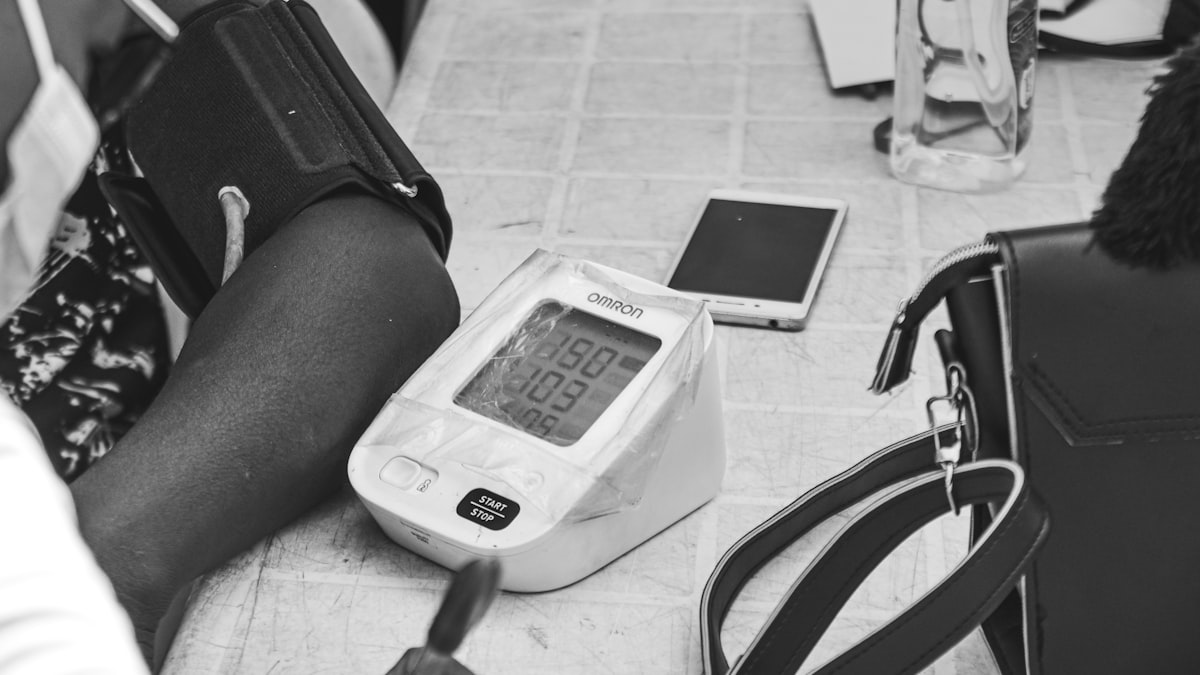
A one-time $35 cuff (Walmart Omron) costs roughly one-eighteenth of the $646 average out-of-pocket price of an ER visit (Peterson-KFF). If home readings prompt even one avoided emergency trip, a device you buy once pays for itself many times over in a single year.
| Device | What you pay | What it can help flag | The bill it competes with |
|---|---|---|---|
| Blood pressure cuff | ~$35 once (Walmart Omron) | High or rising readings between visits | Avg ER visit: $2,453 total, $646 out of pocket (Peterson-KFF) |
| Pulse oximeter | ~$40 once (Walmart Equate) | Oxygen readings between visits | That same out-of-pocket ER bill |
| Smart scale | ~$25 once (RENPHO) | Unexplained weight trend changes | $19,736/yr avg medical spend per person with diabetes (ADA) |
| OTC CGM (Stelo) | $89/mo ≈ $1,068/yr (Stelo) | Glucose patterns before a diagnosis | Same $19,736/yr average (ADA) |
| OTC CGM (Lingo) | $54/2wk ≈ $1,404/yr (Lingo) | Same | Same |
Run the per-device math. Cuff: one avoided $646 out-of-pocket ER bill equals about 18 cuffs (Peterson-KFF). Scale: $25 once against $19,736/yr of average diabetes-related medical spend (ADA) is a rounding error. CGM: a full year of Stelo (~$1,068) still costs roughly 5% of that annual spend — continuous data at a fraction of the complication bill.
The diabetes math: why early detection pays
Early detection of prediabetes can save thousands in annual diabetes costs. According to the CDC, 115.2M US adults have prediabetes, and 8 in 10 are unaware. Diabetes cost $412.9B in 2022, with average medical spend of $19,736/yr per person—2.6x higher than for those without diabetes (ADA). Plus, 1 in 4 US adults with diabetes is undiagnosed.
Diagnosis timing is the financial hinge: the $19,736/yr average spend begins at diagnosis (ADA). The cheap entry point is screening. The USPSTF gives grade B status to screening for prediabetes and type 2 diabetes in adults 35–70 with overweight or obesity (USPSTF) — a routine lab beats a late diagnosis on price every time.
The blood-pressure math: catching what the doctor missed
Home monitoring can catch undiagnosed hypertension, a condition that leads to expensive health crises. Million Hearts reports 48.1% of US adults have hypertension, but only 22.5% have it controlled. Critically, ~11M US adults don’t know their BP is too high (Million Hearts). The ACC/AHA 2017 recommends home BP monitoring to confirm a diagnosis.
Office readings are snapshots; a $35 cuff (Walmart Omron) fills the months between visits, which is exactly where undiagnosed cases hide. Bring the log to appointments — and if something looks off, you’re discussing it in a scheduled visit, not at the ER’s $646 out-of-pocket price (Peterson-KFF).
How to save money with at-home health monitoring
A $35 home blood pressure cuff (Walmart Omron) can flag undiagnosed hypertension before it becomes an emergency room visit. The average ER visit costs $2,453 total, with $646 coming out of your pocket (Peterson-KFF). Catching high blood pressure early lets you discuss low-cost management options with your doctor, potentially avoiding a catastrophic event and bill.
The arithmetic is lopsided in your favor: one avoided out-of-pocket ER bill of $646 equals roughly 18 cuffs, 16 oximeters, or 26 scales — and the device keeps producing readings for years afterward. Used daily, the per-reading cost of a cuff falls to pennies within a few months.
Use your HSA and FSA to cut device costs
You can use pre-tax dollars to pay for at-home health monitors, effectively reducing their price. IRS Pub 502 treats diagnostic devices like blood sugar test kits and monitors as deductible medical expenses (IRS). Most home monitoring devices are eligible for your Health Savings Account (HSA) or Flexible Spending Account (FSA).
The saving is structural: every pre-tax dollar skips income tax, so the effective discount equals your marginal tax rate — a $35 cuff (Walmart Omron) paid from an HSA costs less in real earnings than $35 from a post-tax paycheck. Watch FSA deadlines, keep receipts, and use our health finance tools to check balances before you buy.
Workplace wellness programs that cover monitors
Employers have a financial reason to subsidize prevention: hypertension alone costs the US about $219B/yr (Million Hearts). Many workplace wellness programs reimburse part or all of a blood pressure cuff or smart scale, so a benefits-eligible device can end up costing you nothing out of pocket.
Ask HR three questions: does the wellness stipend cover store-bought monitors, is pre-approval required, and does reimbursement reset annually? Timing a $35 cuff purchase against a stipend you would otherwise forfeit turns a cheap device into a free one.
Common mistakes that waste money
The costliest mistake is paying post-tax for an eligible device, or skipping home screening until a $646 out-of-pocket ER visit happens (Peterson-KFF). Ignoring the USPSTF grade B screening recommendation for prediabetes and type 2 diabetes in adults 35–70 with overweight/obesity (USPSTF) is another avoidable expense.
- Paying cash for an eligible device. If it qualifies as a diagnostic expense (IRS), post-tax payment is money left on the table.
- Assuming annual checkups catch everything. Only 22.5% of adults with hypertension have it controlled (Million Hearts); the gaps live between visits.
- Skipping the grade B diabetes screening if you’re 35–70 with overweight or obesity (USPSTF); late diagnosis is the expensive path.
- Starting a CGM subscription (~$1,068–$1,404/yr) before checking whether wellness or FSA dollars can offset it.
FAQ
Answers below cover the three questions readers ask most about home monitors: eligibility, prescriptions, and total setup cost. Home blood pressure monitors are generally FSA/HSA eligible as diagnostic devices under IRS Pub 502, and all prices cited were last verified in August 2026.
Are home blood pressure monitors FSA/HSA eligible?
Yes. Home blood pressure monitors are generally FSA- and HSA-eligible because they are diagnostic devices; IRS Pub 502 lists blood sugar test kits and similar monitors as deductible medical expenses. Check with your plan administrator before buying, keep your receipt, and pay with your benefits card when possible to skip reimbursement paperwork.
Do over-the-counter glucose monitors need a prescription?
No. OTC continuous glucose monitors like Stelo ($89/mo, Stelo) and Lingo ($54/2wk, Lingo) are sold without a prescription directly from the manufacturer or retailers. Budget roughly $1,068–$1,404/yr, and confirm FSA/HSA eligibility with your plan before subscribing.
How much does an at-home health monitoring setup cost?
A basic one-time kit runs about $100 total: a blood pressure cuff ($35, Walmart Omron), a pulse oximeter ($40, Walmart Equate), and a smart scale (~$25, RENPHO). An OTC CGM at $54–$89/month adds recurring cost but supplies continuous data.
Where to go next
An at-home monitoring habit is cheapest when paired with the right payment strategy: the average ER visit runs $2,453 total and $646 out of pocket (Peterson-KFF), and every device above costs less than that single bill. These guides cover the next money moves.
- Run the numbers for your household with our health finance tools.
- Learn how to maximize your HSA before your next device purchase.
- Price the downside with our guide to what an ER visit costs without insurance.
- Check which preventive screenings are free so in-clinic checks cost nothing too.