Health Insurance When Self-Employed: A Cost Guide
When you work for yourself, your business has to buy its own health benefits, and being uninsured or underinsured is a direct, calculable financial risk that threatens your income stability. Your strategy must focus on three core cost-control levers: 1) choosing the right coverage source, 2) maximizing available tax subsidies, and 3) selecting a plan tier that balances premium costs against potential out-of-pocket expenses.
How This Guide Was Built
This guide is based on official government sources and KFF analysis; we did not test enrollment hands-on. Our research draws from official Healthcare.gov pages outlining enrollment rules and subsidy details, IRS guidance on the self-employed deduction, and a market analysis of preliminary rate filings from the KFF. We verified deadlines, subsidy thresholds, and the core rules for all pathways discussed. Last verified: September 2026.
How do I get health insurance when I am self-employed?
Self-employed individuals with income but no employees—like freelancers, consultants, and independent contractors—must enroll for coverage through the individual Marketplace established by the Affordable Care Act (source). If your business grows to include even one employee beyond yourself or a family member, the Small Business Health Options Program (SHOP) may become applicable.
Your primary path is the Marketplace, where you’ll shop for plans during the annual open enrollment period. The process is designed for individuals, not businesses, so your eligibility for savings is based on personal household income, not profit margins. Understanding this distinction is the first step to controlling your cost. For help navigating the selections, consider our guide on how to choose a health insurance plan during open enrollment.
Compare your coverage options
Comparing coverage sources means weighing premium, out-of-pocket exposure, and subsidy eligibility together, because the cheapest monthly payment is often not the cheapest plan overall. Marketplace plans are the only source of income-based premium tax credits for self-employed people, while Medicaid, SHOP, COBRA, short-term plans, and HDHP-plus-HSA arrangements each trade cost against eligibility, benefits, or flexibility (source).
| Coverage Source | Key Cost Characteristics | Who It’s For | Key Consideration |
|---|---|---|---|
| Marketplace / ACA | Premium subsidies available based on income. Total cost = premium + out-of-pocket costs (deductible, copays, coinsurance). | Self-employed with no employees; income-based savings for all. | Your only option for income-based premium tax credits (PTCs). Learn more about expected premiums. |
| SHOP | Employer-sponsored coverage you buy as the business. | Self-employed businesses with at least one non-owner employee. | Small employers may qualify for the small business health care tax credit if they offer coverage and meet the SHOP requirements; rules and plan choices vary by area. |
| COBRA | You generally pay the full premium yourself, with no subsidies. | Those who recently left a job with employer-sponsored coverage. | Usually the most expensive short-term bridge; it is a stopgap, not a long-term solution. |
| Short-Term Plan | Low monthly premiums, but limited coverage; not ACA-compliant. | People needing temporary, low-cost coverage between major plans. | Typically excludes pre-existing conditions and may cap benefits — a high financial risk if you get sick. |
| HDHP + HSA | High-deductible plan (often Bronze/Silver on Marketplace) paired with a tax-advantaged Health Savings Account. | Healthy individuals who want low premiums and a way to save pre-tax for medical costs. | Requires discipline to fund the HSA. Offers triple tax advantages. See our guide on how to maximize your HSA. |
| Medicaid | No premiums for most enrollees; covered services have no or very low out-of-pocket costs. | Individuals and families with income below state-specific thresholds. | Apply anytime; coverage can begin immediately. Eligibility depends on income and state expansion status (source). |
All ACA-compliant plans (Marketplace, SHOP, and some off-market plans) must cover pre-existing conditions without charging more, provide free preventive care, and cannot impose lifetime or yearly dollar limits on essential health benefits (source).
Key costs: premiums, subsidies, and your income
Your single biggest cost lever is the Premium Tax Credit (PTC), a subsidy that lowers your monthly marketplace premium. Eligibility is determined by your household income as a percentage of the Federal Poverty Level (FPL). For 2026 coverage, you may qualify if your income is between 100% and 400% of the 2025 FPL in all states (source).
Derived math: 400% of the 2025 FPL is $62,600 for an individual (4 x $15,650) and $128,600 for a family of 4 (4 x $32,150) — this is the income ceiling above which PTCs phase out entirely (source).
However, the cost environment is shifting. The enhanced (COVID-era) Marketplace savings ended Dec 31, 2025. As a result, “if you qualify for savings in 2026, you’ll likely pay more for your Marketplace plan premium” (source). The market reflects this: a KFF analysis of preliminary 2027 rate filings found a median proposed marketplace premium increase of 14%; if it holds, typical premiums would be more than one-third higher than 2025, with insurers citing the credit expiration as a key driver (source).
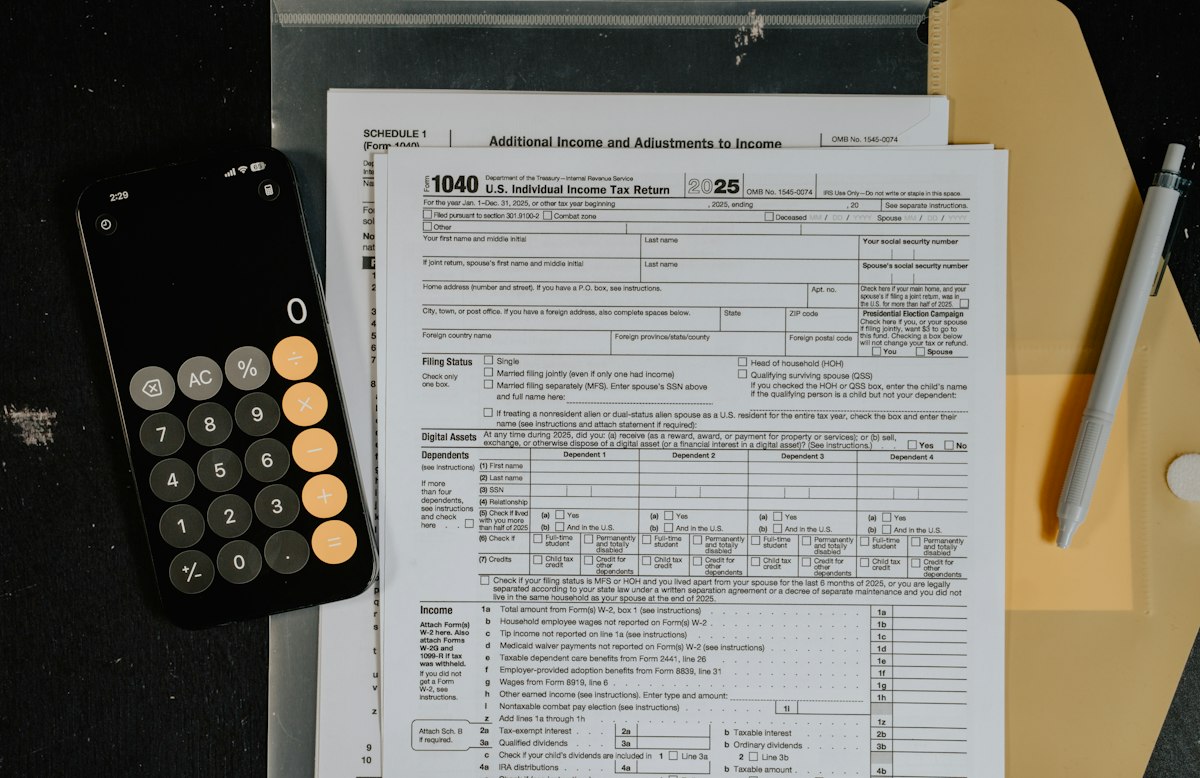
Crucially, Marketplace savings are based on your expected household income for the coverage year, not last year’s income. Modified adjusted gross income (MAGI) is defined as your adjusted gross income (Form 1040, line 11) plus untaxed foreign income, non-taxable Social Security benefits, and tax-exempt interest (source). As a self-employed person, you must project your annual earnings carefully—overestimating can cost you a subsidy, while underestimating can result in a large tax bill when you reconcile.
Enrollment periods: when to sign up
You cannot buy health insurance whenever you want; you must adhere to strict enrollment windows. The primary opportunity is the annual Open Enrollment Period (OEP). For 2027 coverage, OEP runs from November 1 through January 15. To have coverage start on January 1, you must enroll by December 15 (source).
Miss that window, and your only option is a Special Enrollment Period (SEP). An SEP lasts 60 days and is triggered by a qualifying life change such as losing other health coverage, getting married, having a baby, or relocating (source). For self-employed individuals, the most common trigger is losing other coverage, like a plan from a spouse’s employer.
For those who have recently lost employer-based coverage, the rules are specific. Read our detailed breakdown on how to get health insurance after losing your job.
If you qualify for Medicaid, you can apply anytime year-round. Coverage can begin immediately upon approval, and the income thresholds are based on the 2026 FPL (source).
5 common mistakes that cost self-employed workers
Most self-employed people overpay for coverage through the same five avoidable errors: missed enrollment windows, wrong income estimates, premium-only plan comparisons, unreconciled subsidies, and unclaimed tax deductions. Each one has a fix, and together they can change your annual cost more than shopping for a different carrier (source).
- Missing Open Enrollment: Assuming you can sign up later leads to being uninsured for a year or paying exorbitant COBRA premiums.
- Ignoring the Marketplace Because You “Make Too Much”: Many freelancers, especially with fluctuating income, overestimate their annual MAGI. You should use health finance tools to project your income and see if you fall within the 100%-400% FPL range for a subsidy.
- Choosing a Plan Based on Premium Alone: A Bronze plan has the lowest premium but the highest deductible. If you have ongoing medical costs, a Silver or Gold plan could have a lower total annual cost. Analyze your expected healthcare usage, not just the monthly payment.
- Forgetting to Reconcile Subsidies: If you take advance premium tax credits (APTC) based on projected income and your actual income ends up higher, you may have to repay some or all of the subsidy at tax time. Conversely, if your income drops, you may be owed more back.
- Not Claiming the Self-Employed Health Insurance Deduction: This is money left on the table. Premiums you pay for yourself, your spouse, and your dependents may be deductible, which lowers your taxable income (source).
The tax advantage: deducting your premiums
As a self-employed individual, you have a tax advantage that employees typically don’t: the ability to deduct health insurance premiums you pay for yourself and your family, which lowers your taxable income and your overall tax bill (source).
The Self-Employed Health Insurance Deduction is claimed on IRS Form 7206 (source). You can include premiums for medical, dental, and qualifying long-term care insurance for yourself, your spouse, and your dependents. Because the deduction reduces your taxable income rather than requiring itemized deductions, it delivers a benefit whether or not you itemize — but the rules on which months and which policies qualify are specific, so check Form 7206 and its instructions before you file.
FAQ
What if my self-employment income is very low or zero for a year?
If your income falls below 100% of the federal poverty level, you generally do not qualify for a Premium Tax Credit on the Marketplace. In this scenario, your most affordable option may be enrolling in Medicaid, if your state has expanded it and you meet the income eligibility rules (source). Apply directly through your state’s Medicaid agency.
Can I use a Health Savings Account (HSA) with any Marketplace plan?
No. To contribute to an HSA, you must be enrolled in a qualifying High Deductible Health Plan (HDHP). Only HSA-qualified high-deductible plans allow contributions, so check a plan’s HDHP status before enrolling if an HSA is part of your cost-saving strategy (source).
How does a Special Enrollment Period work if I’m just starting my business?
Simply starting a business does not qualify you for an SEP. The qualifying event must be a loss of other minimum essential coverage—for example, leaving a job where you had employer-sponsored insurance. The SEP gives you 60 days from that event to enroll in a new Marketplace plan (source).
Where to go next
Your next step is to estimate your Modified Adjusted Gross Income for the coming year. This single number determines your eligibility for subsidies and Medicaid. Once you have a projection, mark the Open Enrollment calendar and begin comparing plans. Use our health finance tools to run the numbers. For a deeper dive into the changing premium landscape, read our analysis on ACA Marketplace premiums for 2027.